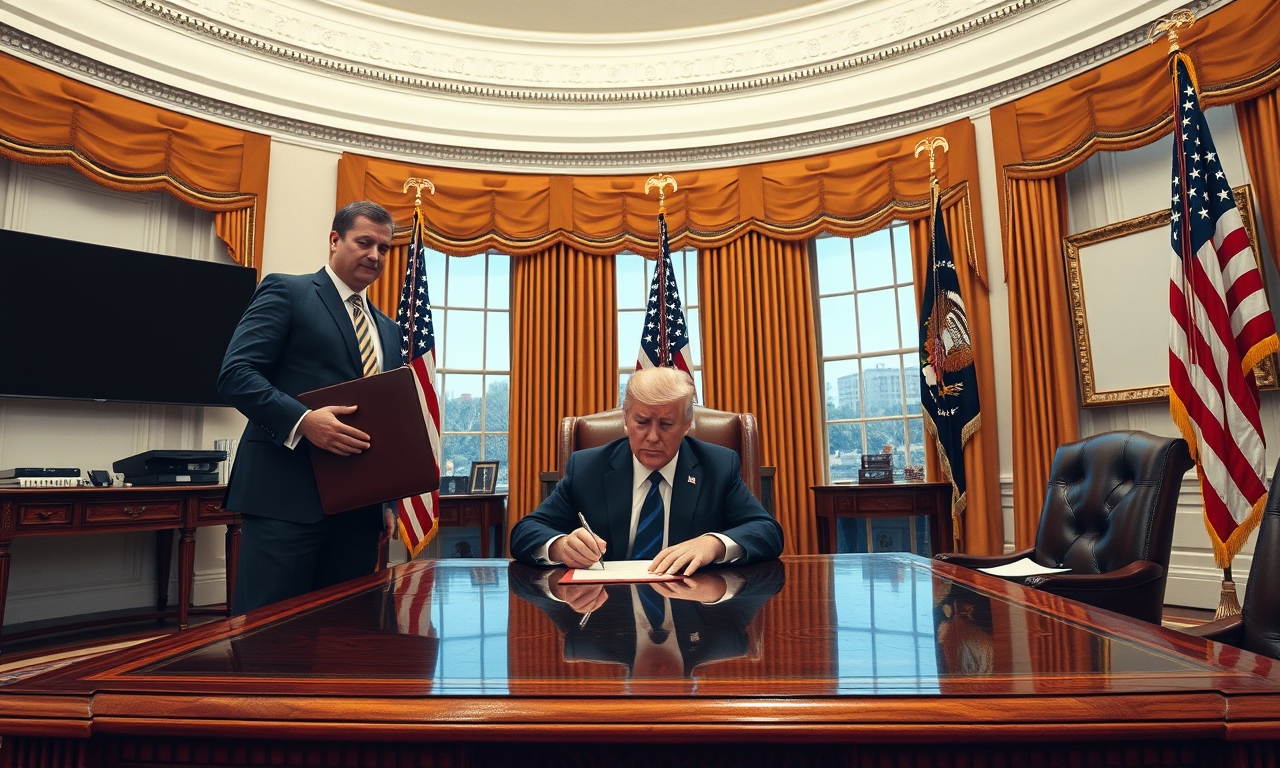
President Donald Trump has signed an executive order that would block other college football games from being broadcast at the same time as the annual Army-Navy game, according to a report from The Washington Post. The order represents an unusual intervention in sports broadcasting scheduling by the executive branch.
The Army-Navy game, traditionally played on the second Saturday of December, is a longstanding college football rivalry between the United States Military Academy at West Point and the United States Naval Academy at Annapolis. The annual matchup has been a fixture of American sports since 1890 and typically draws significant viewership due to its unique status as a service academy rivalry.
The executive order's timing has drawn attention given concurrent developments in U.S. foreign policy. The Post's report notes that the football scheduling decision comes "while his #Epstein war of choice against Iran continues," though the specific nature of any connection between these events remains unclear from the available information.
The decision to use executive authority for sports broadcasting scheduling represents a departure from typical presidential priorities. Executive orders generally address matters of federal policy, national security, or administrative procedures rather than entertainment programming decisions.
The reaction to the order has been mixed, with some observers questioning the use of presidential powers for what they characterize as a relatively minor matter in the context of other pressing national concerns. The Washington Post's coverage frames the decision as potentially misplaced priorities given ongoing international tensions.
The specific mechanisms by which the executive order would be implemented remain to be detailed. Questions persist about how the order would affect television networks, streaming services, and the various stakeholders in college football broadcasting rights.
As of the report's publication, the White House had not provided detailed explanations for the rationale behind the executive order or how it would be enforced. The intersection of presidential authority, sports entertainment, and national priorities continues to generate discussion among political observers and sports fans alike.